
UniDine
A dining app for Columbia students.
I was tired of checking LionDine and separate Columbia dining pages just to figure out where to eat. So during my first semester at Columbia, a friend and fellow Columbia student and I built and shipped UniDine: live dining hours, menus, and local student deals in one iOS app.
2025–26 · React Native / Expo · Firebase · iOS
Product · launch · merchant outreach · App Store
01 — From annoyance to App Store
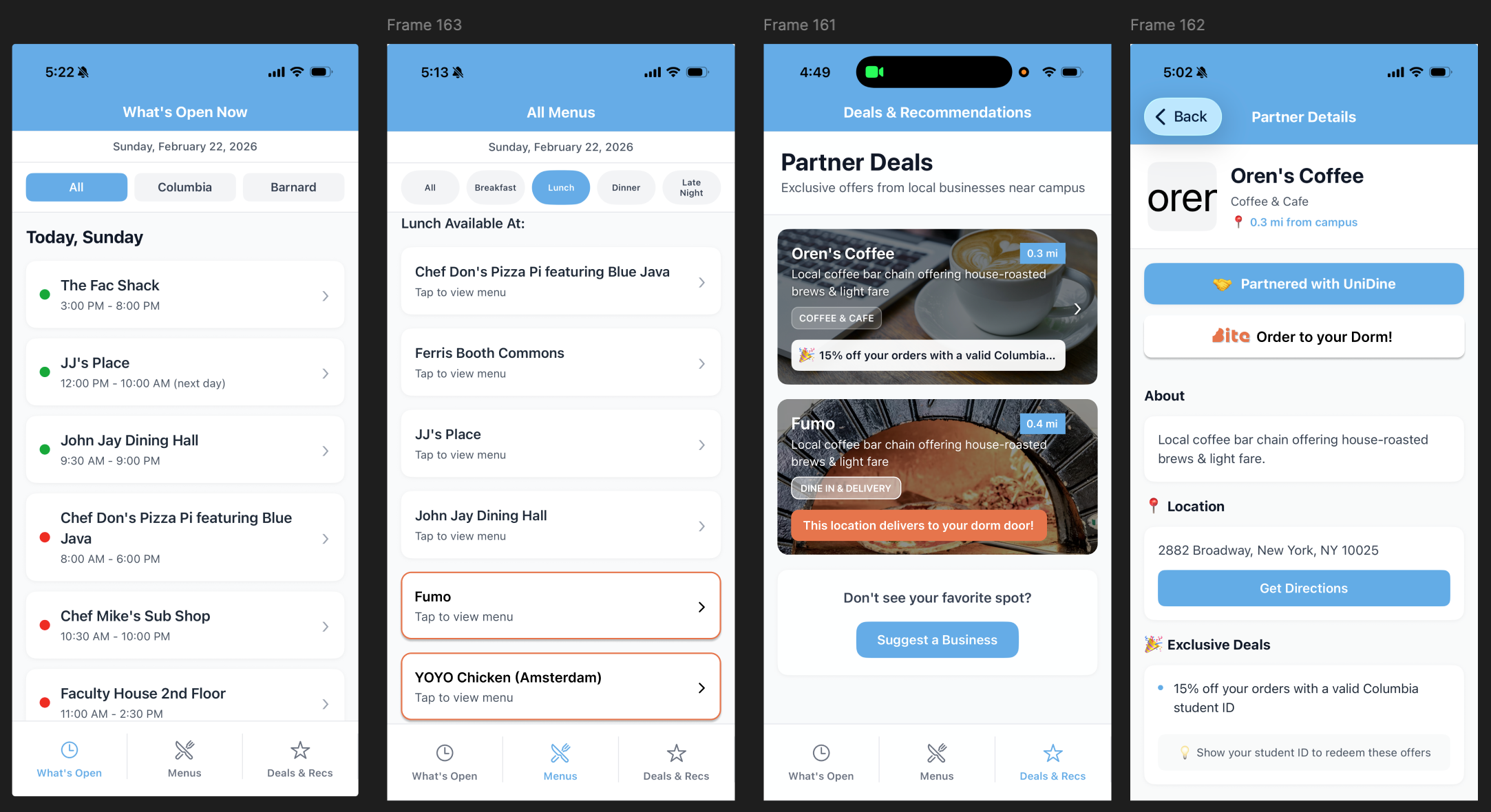
It started as something I wanted for myself: open an app, immediately see what dining halls were open, then check what they were serving.
The project quickly expanded into dynamic menu scraping, Barnard locations, nearby restaurants, student-only deals, and a merchant side. We walked Broadway and Amsterdam pitching businesses while simultaneously fighting Expo builds, Firebase auth, TestFlight crashes, provisioning profiles, and App Store review.
Launch artifact · 2025
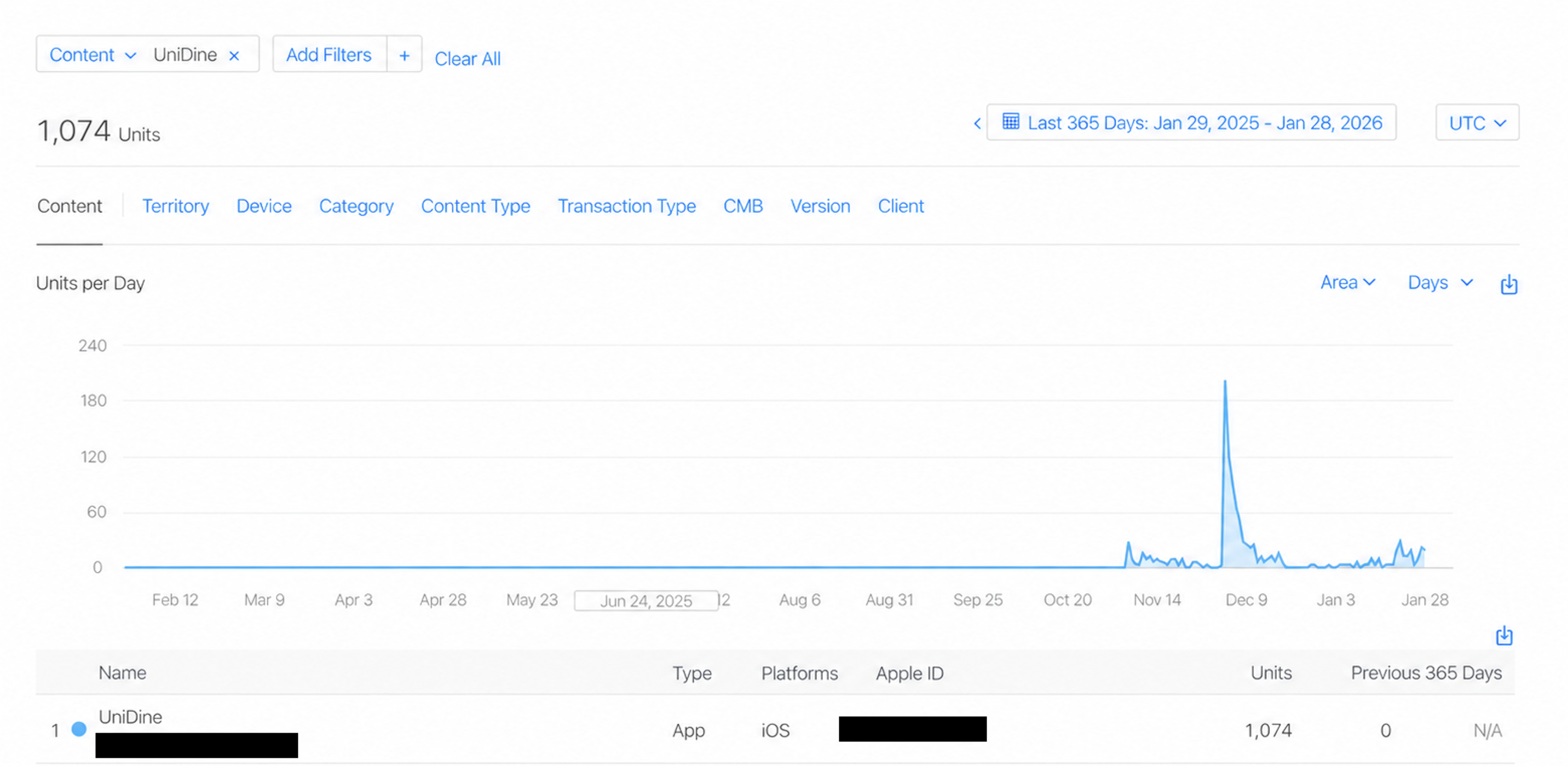
- 1,074
- App Store units in the captured period
- 250
- downloads by Dec. 7, 2025
- Dozens
- of local businesses researched and approached
02 — The product
What’s open → what’s being served → what’s nearby.
What’s OpenLive opening status across Columbia and Barnard dining locations.
MenusDaily scraped menus organized by meal period.
Deals & RecsNearby businesses, student deals, and later dorm-delivery integration work.
03 — It became more real than expected
- Sep 2025
- Started from my frustration with existing dining websites
- Oct
- TestFlight, merchant outreach, first business interest
- Nov
- Public App Store launch and organic student adoption
- Dec
- 250 downloads
- Spring 2026
- Began exploring/integrating dorm delivery with BiteCampus
Around the same time, Columbia dining software became unexpectedly crowded. New native dining apps appeared, LionDine became part of the Spectator ecosystem, and Columbia’s own dining tooling improved. I gradually stopped actively maintaining UniDine. The app stayed live and continued receiving baseline traffic.
04 — What I took from it
UniDine was the first product I shipped at Columbia that strangers actually used.
I learned that building the interface was only part of the work. Keeping scraped data fresh, getting an iOS build through production, doing physical distribution, convincing merchants, and deciding what not to build mattered just as much.
More than anything, it showed me how quickly a tiny tool built for yourself can turn into a real product once other people begin depending on it.